


Daily Fossil Coast News Roundup - December 21st 2025
- Wayne Munday
- Dec 22, 2025
- 6 min read
Sip back and explore today’s Fossil Coast Daily News Roundup that brings together discoveries that span dinosaur eggshells, footprints, feathers, and frozen polar sediments that tells a story of how ancient life grew, moved, and adapted across deep time. Reports published on 21 December 2025 reveal new insights into dinosaur reproduction from microscopic structures preserved in eggshells, the presence of massive Early Jurassic dinosaurs beneath Antarctic ice, and surprising evolutionary experiments among feathered dinosaurs that never achieved flight. Marine reptiles from tropical South America, giant penguins from the recent geological past, and predator–prey interactions recorded in teeth and tracks further enrich the picture. Together, these stories show how fossils, from trace evidence to skeletons, continue to refine our understanding of evolution, extinction, and environmental change.
Reading Time in Stone: Eggs, Embryos, and Dinosaur Reproduction
A Hidden Clock Inside Dinosaur Eggshells
A study highlighted by ScienceDaily reports that scientists have identified a previously unrecognised biological “clock” preserved within dinosaur eggshells. The research focuses on microscopic growth structures in fossil eggshells that record the pace of egg formation. Comparable structures are known in modern birds and reptiles, where they reflect daily or near-daily rhythms of calcium deposition.

The scientific significance lies in what this allows palaeontologists to measure for the first time with confidence: how long dinosaur eggs took to form. This has direct implications for understanding dinosaur metabolism, nesting behaviour, and reproductive strategies. Slower egg formation may imply extended nesting periods and greater vulnerability to predation, while faster formation could indicate higher metabolic rates. Researchers emphasise that interpretations are constrained by preservation quality and the limited number of eggshells studied.
Eggs That Never Hatched
Complementing this work, a Dailymotion video report focuses on a ~70-million-year-old dinosaur egg that never hatched, dating to the Late Cretaceous (~70 Ma). The egg preserves evidence of embryonic development arrested before hatching. While the precise dinosaur group is not specified in the report title, such fossils are rare and valuable because they capture a moment in deep time when reproduction failed.
Together with eggshell microstructure studies, unhatched eggs provide insight into developmental biology, environmental stress, and extinction dynamics near the end of the Age of Dinosaurs. Any conclusions about causes of failure such as temperature, flooding, or disease remain tentative.
Giants in the Ice: Antarctic Dinosaurs and Polar Worlds
A Massive Dinosaur Beneath Antarctic Ice
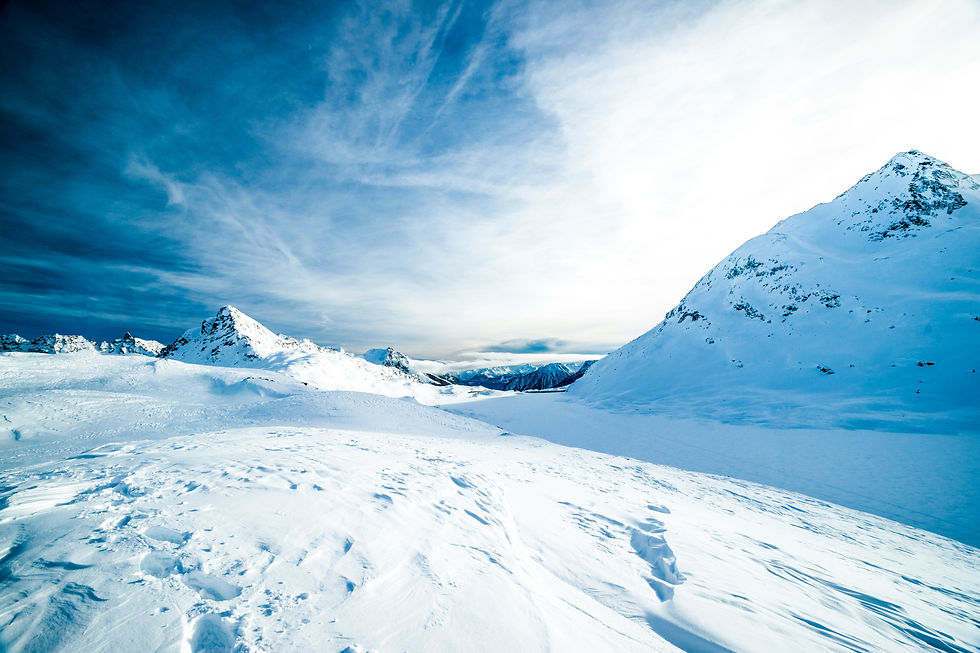
Several outlets (MSN and The Daily Galaxy) report the discovery of a 190-million-year-old dinosaur fossil beneath Antarctic ice, placing it in the Early Jurassic. The fossil is described as “absolutely massive,” indicating a large-bodied dinosaur, though the exact taxonomic identity is not confirmed in the reporting.
The find is significant because it reinforces evidence that large dinosaurs inhabited polar regions during the Jurassic, when Antarctica was part of the southern supercontinent Gondwana and experienced much warmer climates than today. Fossils preserved beneath ice sheets are exceptionally challenging to study, and researchers caution that interpretations depend on limited exposures and logistical constraints. Geological maps of Jurassic Gondwana are often recommended for contextualising such finds.
Enormous Eggs from Antarctica
Adding to the Antarctic story, Earth.com reports on an enormous ~68-million-year-old egg, nicknamed “The Thing,” discovered in Antarctic deposits dating to the Late Cretaceous. The egg’s size suggests it was laid by a very large animal, potentially a marine reptile or dinosaur, though uncertainty remains until further analysis confirms its origins.
These discoveries collectively highlight Antarctica as a key archive of polar ecosystems, preserving evidence of dinosaurs and other large vertebrates thriving at high latitudes shortly before the end-Cretaceous mass extinction.
Feathers Before Flight: Rethinking Dinosaur Wings
Feathered Dinosaurs That Never Flew
A report from SciTechDaily describes research on feathered dinosaurs that did not fly, challenging long-held assumptions that wings evolved primarily for aerial locomotion. Fossils discussed in the article preserve feathers arranged in wing-like structures, yet skeletal anatomy indicates these animals were not capable of powered flight.
The broader evolutionary context is crucial. Feathers likely evolved first for insulation, display, or balance, with flight emerging later in specific lineages leading to birds. These fossils reinforce the idea that evolution is experimental, with structures acquiring new functions over time. The findings help explain why early bird evolution involved multiple stages and side branches rather than a single, linear pathway.
Tracks, Teeth, and Behaviour Frozen in Place
Immense Dinosaur Trackways in Italy
Multiple media reports, including Oman Observer and The Daily Express, describe an “immense” collection of dinosaur footprints discovered in Italy, near a Winter Olympic venue. While precise stratigraphic details are not provided in the headlines, similar Italian tracksites typically date to the Triassic–Jurassic interval and are preserved in coastal or tidal flat sediments.
Trackways are a form of trace fossil, recording behaviour rather than anatomy. They reveal how dinosaurs moved across landscapes, whether they travelled alone or in groups, and how they interacted with soft substrates such as mud or sand. The Italian footprints also highlight the intersection of modern development and deep-time heritage, emphasising the need for careful conservation.
Predators Revealed by a Single Tooth
A WION Podcast report focuses on a Tyrannosaurus rex tooth that reveals evidence of a predator that ate dinosaurs. Teeth are among the most informative vertebrate fossils, preserving wear patterns, breakage, and sometimes chemical signatures of diet.
While sensational headlines often oversimplify such finds, the scientific value lies in reconstructing food webs and predator–prey relationships in Late Cretaceous ecosystems. Without additional contextual data, such as associated bones or sediments, researchers remain cautious about drawing firm conclusions beyond what the tooth itself records.
Life in the Seas and Rivers of the Past
Marine Reptiles from Colombia
Prensa Latina reports the discovery of marine reptile fossils in Colombia, adding to the growing record of Mesozoic marine life from northern South America. Although the article title does not specify age or taxa, Colombian marine reptile fossils are typically associated with Jurassic or Cretaceous marine sediments deposited in warm, shallow seas.
These fossils help reconstruct ancient tropical marine ecosystems and clarify how marine reptiles dispersed between ocean basins during the breakup of Gondwana. Sedimentological context such as whether fossils occur in limestone or shale is key to interpreting their environment of deposition.
What Happened to Rivers When Dinosaurs Disappeared?
An India Today article addresses a broader question: how Earth’s rivers changed as dinosaurs disappeared at the end of the Cretaceous. Although not focused on a single fossil, the story draws on sedimentary and fossil evidence showing shifts in river size, stability, and vegetation after the mass extinction ~66 Ma.
The loss of large herbivorous dinosaurs likely altered floodplain dynamics, allowing denser vegetation and more stable river channels to develop. This illustrates how extinction events reshape not only life but also landscape processes, linking palaeontology with geomorphology and climate science.
Penguins, Predators, and New Species
A Giant Penguin from the Recent Past
A report from Click Petróleo e Gás describes a giant penguin fossil dated to ~3 million years ago, placing it in the Pliocene Epoch. Giant penguins are known to have exceeded the size of modern species, reflecting different oceanic conditions and food availability. Such fossils are important for understanding how climate cooling and ocean circulation changes influenced marine birds leading up to the Ice Ages. Precise anatomical comparisons are essential to determine how these penguins relate to living lineages.
A New Predator from Brazil
Another Click Petróleo e Gás article reports a ~240-million-year-old predator fossil from Rio Grande do Sul, Brazil, dating to the Middle Triassic (~240 Ma). The fossil represents a newly recognised carnivorous vertebrate measuring several metres in length, although the exact group is not specified in the headline.
Triassic predators occupied ecosystems recovering from the end-Permian mass extinction, the most severe biotic crisis in Earth history. Discoveries from southern Brazil contribute to understanding how complex food webs re-emerged during this recovery interval.
Why It Matters
The stories highlighted today demonstrate how palaeontology operates across scales from microscopic eggshell structures to continental-scale tracksites and polar dinosaurs locked beneath ice. Together, they show how fossils inform fundamental questions about reproduction, growth, behaviour, climate adaptation, and ecosystem recovery. By grounding interpretations in physical evidence and geological context, these discoveries strengthen our understanding of how life responds to environmental change over millions of years.
As 2025 draws to a close, these discoveries underscore that deep time is not static but continually refined by new evidence. Whether emerging from Antarctic ice, Italian bedrock, or the microstructure of an eggshell, fossils remain essential guides to Earth’s history. Ongoing research, combining fieldwork, laboratory analysis, and re-examination of existing collections, will continue to reveal how ancient organisms lived, adapted, and ultimately shaped the world we inherit today.

